


The Sponge Cache
Book one of Things Left Open. A ledger that does not balance, and a stranger already willing to pay too much for it.

Carrier Press publishes the fiction of Jeffrey L. Carrier, books for young readers, and a line of restored classics. 79 titles, all available now.
Free sample
A grandmother dies and leaves Marina a ledger that does not balance, and a stranger is already willing to pay far too much for it. Get the opening five chapters free, sent straight to your inbox as EPUB and PDF.
A short welcome note from me, and only when there is news after that.
No spam. One click unsubscribe any time. The sample is yours to keep.
Read the opening
Things Left Open, Book One. Chapter One, The Funeral.
Marina counted nine mourners who still spoke Alexandrian Greek and seventeen who did not. The funeral was small. Her grandmother had wanted it small, and the people who came spoke either the Alexandrian Eudoxia had carried for sixty-five years in Athens or the Athenian her daughter had refused to inherit and refused to replace. Anastasia received condolences without correcting anyone's Greek. Marina, who had spent the morning cataloguing the mourners by their accents because it was the only thing she could think to do, stood a half step behind her mother and held her gloves.
The cemetery was on the south slope of the city. The Greek-Egyptian section was a small plot at the back, where the cypresses thinned and the city spread out toward Piraeus in the afternoon light. Eudoxia had picked the plot twenty years ago, paid for it in francs converted on a holiday, and told no one until the paperwork had to be witnessed. That was Eudoxia. Marina had organized the witnesses herself. She had been twenty-four, a graduate student, and her grandmother had said this is the kind of thing I prefer to do while I can still sign my own name.
The priest read in Greek with a slight Cypriot inflection. Eudoxia had liked him because he did not pretend to be Alexandrian. The reading was short. Eudoxia had wanted the prayers and not the speeches, and the family had honored it. No one stood to say anything about who she was. Marina had been grateful for it during the service and was grateful for it again now, watching the small line of mourners form to embrace her mother. She would not have known what to say. She had spent a career writing about the women her grandmother had been one of, and had not known how to be in a room of them as a granddaughter.
Anastasia stood very straight. The last of the early-autumn warmth still hung in the cypresses. A drop of sweat moved down the back of Anastasia's neck and Marina watched it without reaching to wipe it. Her mother would not have wanted her to. The line moved forward.
The woman who took Anastasia's hand was perhaps eighty. She wore a small dark hat with a veil and a thin gold cross. She did not introduce herself. Anastasia thanked her in formal Greek. The woman moved past Anastasia toward Marina and stopped in front of her and looked at her for long enough that Marina noticed Anastasia notice. The woman's hands were dry and careful when she took Marina's. She held them.
"I knew your grandmother in Alexandria," the woman said. "I am Lysandra Kallistos."
"Thank you for coming," Marina said.
Lysandra did not release her hands. "There are some things she did not finish," she said. "Pragmata pou meinan anoichta. You will know what to do."
The Alexandrian Greek was perfect. The phrase was Eudoxia's phrase. Marina had heard her grandmother use it about a half-translated letter, about a sweater she had not finished, about a question Marina had asked her once at seventeen and that Eudoxia had refused to answer that day and had not returned to. Things left open. Marina did not move her hands.
"I do not know what you mean," she said.
"No," Lysandra said. "Not today."
That is the first scene. The next five chapters are yours free, as EPUB and PDF.
One door into each line
Seventy nine books is a lot to walk into. These five are the way in: the first book of each series, and the flagship of the restored classics line. Start at whichever one sounds like yours and follow the shelf from there.




Our best selling title

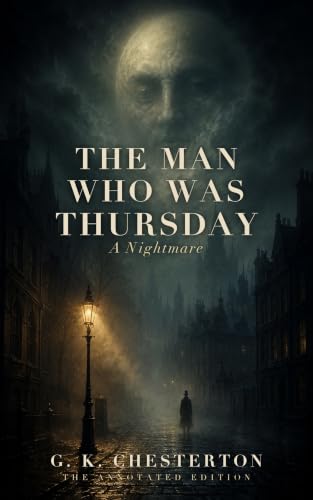
The Yellow Sign did not begin with Chambers and it did not end with him. Four more restored editions trace the line, from the Bierce tales he borrowed his names from to the English weird stories that carried the same dread forward. Each one is annotated for this edition.



Literary suspense
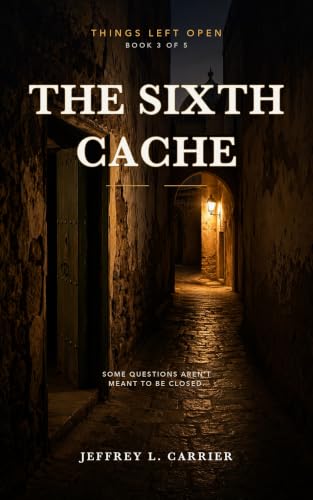
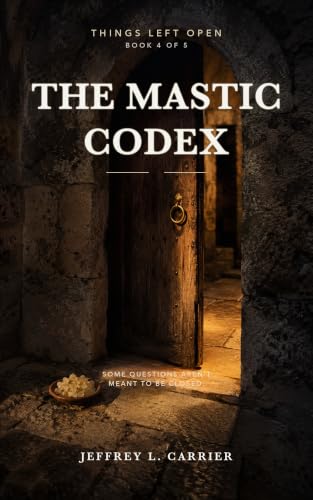
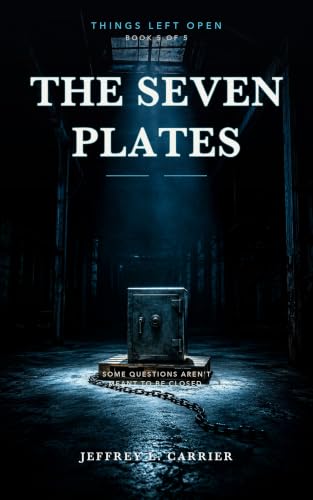
Five standalone but connected novels following different heirs across the Greek diaspora. Read any one alone. They are richest in order.

Upmarket cozy mystery
Three women co-inherit the Ginger Mae Coffee Shop on Patchogu Island, off the North Carolina Outer Banks, and inherit sixty years of what the town agreed not to say out loud.





Literary fiction
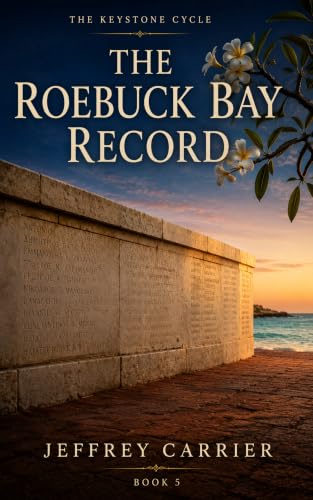
Five Greek diaspora teenagers share a converted sponge merchant's house on Kalymnos, then go on to the places their families left: Tarpon Springs, Darwin, Sfax, Alexandria, Broome. Each of them turns up a document there first. Each book stands alone. They read richer as a cycle.



For young readers
Six friends, six worlds inside a building sandbox, and one new rule for building, testing, and saving in each book. This is where Captain Cubemelon's crew starts, and where every build begins. Ages 10 to 14.





For young readers
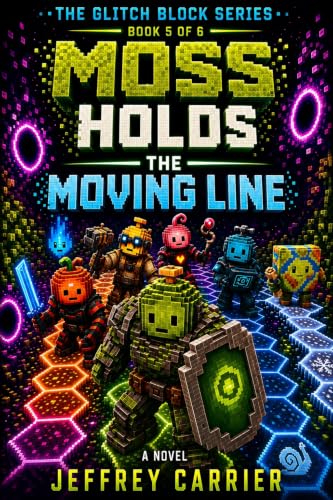
The same crew, after the six worlds are linked and the rules are earned. Fourteen small glitches start flickering between the doors, changing which one opens where. They cannot be fought, only understood. Some of them turn out to be frightened. Ages 8 to 12.





Fiction
A missing sister in a mountain town. A wealth firm with six months to name a successor. A night photographer who only ever watched. An encrypted ledger going back four centuries. They share nothing but the moment somebody decides not to look away.











For young readers and their grown-ups
Practical books about earning, building, and handling money, written for readers who are starting early, plus the grown-up companions.














Restored and annotated editions
Public domain works rebuilt as real editions: newly set interiors, original covers, and new apparatus written for this edition. Not scans, and not the free file with a new jacket.




















Also by Jeffrey L. Carrier
Two projects that are not books. Neon Bounce Club is bright and electronic. Velvet Frequency is the other end of the room.




Also by Jeffrey L. Carrier
Captain Cubemelon and Friends is an all ages comic set in a voxel sandbox lab, where every build gets tested, broken, and fixed again. Sold direct as digital editions you download and keep.
Print editions are on the way from IndyPlanet, the print on demand storefront run by Ka-Blam. This band will carry the print link the day each listing goes live.


Direct support
Carrier Press is one person. Buying a book is the best support there is, and a review is the next best. If you would rather give directly, these go straight to the work.
Become a patron Support via PayPal Send a tip on Venmo
Ethereum mainnet (ETH or ERC-20 only)0xD7bF6e0E28210DC7d3cDD3A5E7e34280eDbA18e7
The author

Jeffrey L. Carrier writes fiction about the things families leave unsaid: inheritance, memory, and the quiet cost of a choice that looked simple from the outside.
His novels run from literary suspense (The Sponge Cache and the Greek diaspora Things Left Open series) to small town cozy mystery (The Marjorie Corey Files) to the literary Keystone Cycle. Whatever the shelf, the pull is the same: a documented record, a family secret, and someone who decides to keep reading when it would be easier to stop.
Before he wrote fiction he served in the U.S. Navy and the U.S. Air Force.
He lives on the Mississippi Gulf Coast with his two sons.